
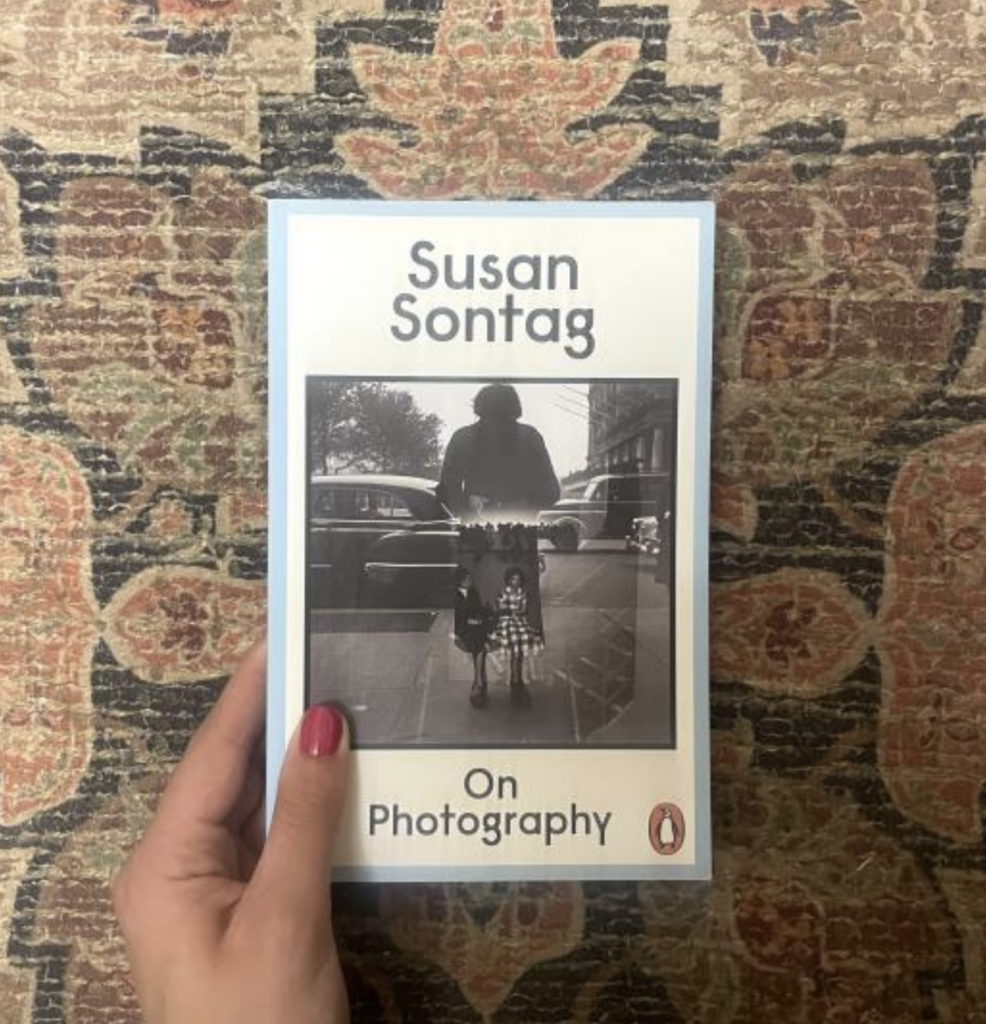
In her book On Photography, Susan Sontag argues that photography is a violent act and to photograph is to possess, transforming a subject into an object.
In the age where it is commonplace to be filmed in public, without your consent nor awareness, captured by incognito Meta glasses, voyeurism is on the rise and gaining millions of views online. Since the release of the digital product, short form content of anonymous men ‘capturing the nightlife’ in booming city centres, filming drunk women in club attire without their awareness are painfully on the rise.
This article will consider the ethics of voyeurism, using David Lynch’s Blue Velvet and Edward Hopper’s Night Windows, which lure the viewer into a voyeuristic lens. By placing ourselves into the same reality as those viewing Meta-glasses content, I want to illustrate the dangers of scopophilic desires, which align with those of the cinema goer and photographer, reinforcing Lynch’s claim that:
‘I am convinced we are all voyeurs. It’s part of the detective thing. We want to know secrets, and we want to know what goes on behind those windows’.
In a TikTok video, user Glassmuseum argues that meta glasses content is power pornography, sparking the question of whether we need better laws and legislation about filming in public. Content created by Meta glasses invites us into undiscovered worlds, allowing anyone to become Lynch’s detective and voyeur.
https://vm.tiktok.com/ZNRTfQ3GJ/ – Link to glassmuseum’s TikTok
Laura Mulvey examines the power dynamics of the gaze in her seminal essay, ‘Visual Pleasure and Narrative Cinema’, stating, ‘In a world ordered by sexual imbalance, pleasure in looking has been split between active/male and passive/female’. Like prey, the passive female sits waiting to be fed to the camera.
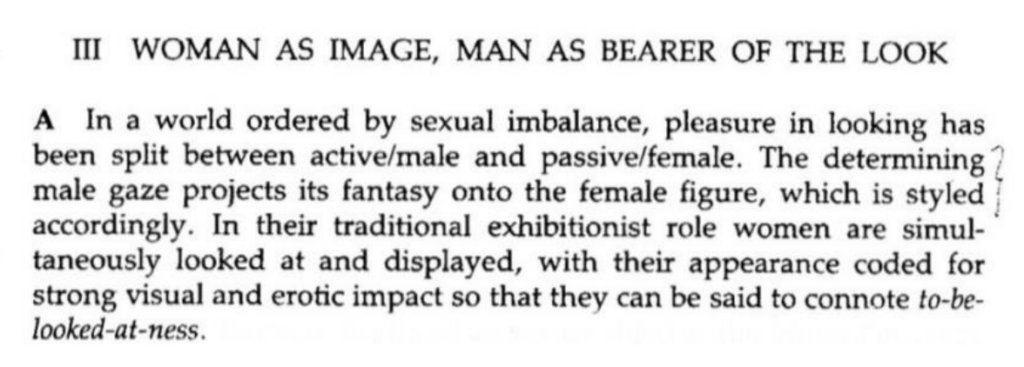
In a patriarchal society, men look at women, and women are looked at. Sontag writes, ‘To photograph is to appropriate the thing photographed. It means putting oneself in a certain relation to the world that feels like knowledge – and therefore, like power’. Meta glasses appeal to this form of peeping-Tom voyeurism and viewing power, in which the camera operator knows they are recording. Still, the female subject does not, illustrating the clear power dynamic that Laura Mulvey defines with her phrase ‘the male gaze’. This creates an unpleasant irony, as we watch content, knowing the subject has no idea they are being filmed and used for views, granting us power as the observer.
This power is emboldened in the comments, where men scrutinise the subject, often resulting to humiliation and degradation tactics. For the majority, men do not like feeling powerless; the appeal of this content is to regain the power many believe they have lost in typical interactions with women. By humiliating women they perceive as ‘high value’, they degrade the woman by reducing her to a sexual object. The fact that the content is posted without consent is central to its appeal, with many claiming it is a huge fear of theirs. The point-of-view nature of this content illustrates the voyeuristic power dynamics; we see them, whilst the watcher, and photographer remains anonymous.
Like pornography, the viewer can imagine themselves in the vicinity of the female subject, and maintains dominance by capturing her without her knowledge. Whilst he may not be able to have her in real life, the watcher can revel in her image, and with AI like Grok, the possibilities are endless for this form of content.
The language of photography itself is violent, for we ‘shoot’ photographs and ‘capture images’. The vocabulary of the art form demonstrates the act of taking, which happens when men film and post Meta-glasses content. In her daily life, a woman is her own active subject; however, diminished under the camera lens, she is transformed into an object which can be consumed and profited from, without her knowledge and consent. Whilst a woman on the street can say no, her image cannot.
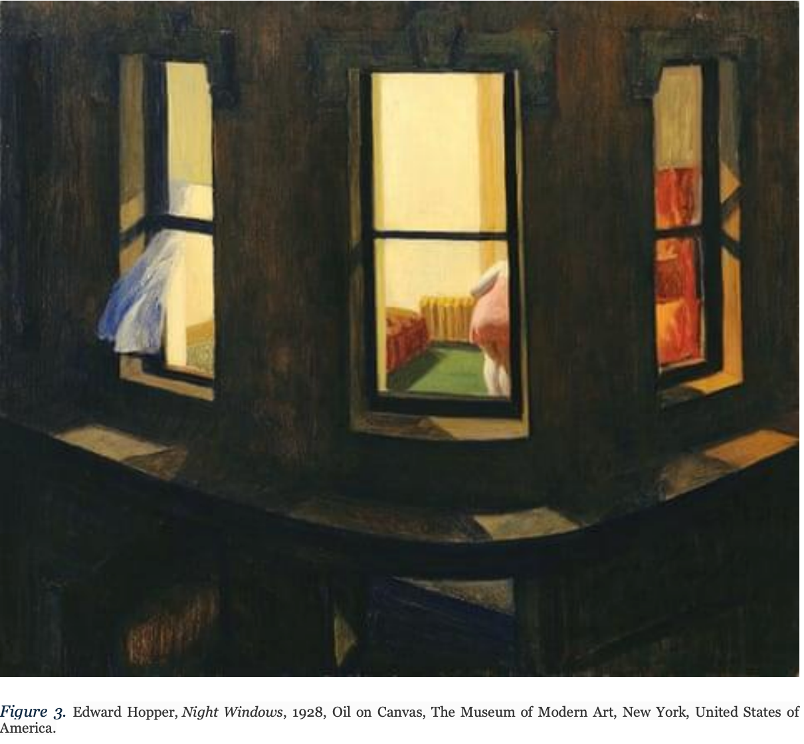
This notion is evident in Hopper’s Night Windows, with the ‘passive’ woman with her back turned to the viewer, thus diminishing her narrative power. Hopper invites the gaze through the high contrast of lightness and darkness, where the bright yellow walls invite and control the visual field. Despite the invitation, the woman is covered by a towel, and her back is turned, highlighting her unwillingness and lack of awareness that she is the subject of the voyeur’s vision. Her unawareness is the same as that of the women being filmed and posted without their consent on social media sites. Although Hopper’s painting romanticises this subject, by implicitly forcing the viewer to take on his voyeuristic gaze, we share the same allure to gazing into other people’s lives.
Luring the viewer into voyeurism, the viewer gazes across to a lone figure in her apartment. Hopper portrays voyeurism as an imbalanced power dynamic through the contrast of display and concealment created by the framing of the work. As Skye Sherwin observes in her article for The Guardian, ‘The frames of the window suggest a film strip, while the theatrical curtains reveal the show’. Through this reading, it is clear how Hopper frames the woman, making her the subject of the painting, thus inviting the gaze. However, this scene also entraps her, as she becomes isolated in the confined space. In this successful attempt to control the visual field, Hopper empowers the viewer, whilst subjecting the woman to objectification.
Hopper’s Night Windows is deeply cinematic, with the viewer concealed in the darkness whilst the viewed is illuminated. Through the same use of light and shade, Lynch mirrors the gloom of the cinema auditorium in the scene where Jeffrey hides in Dorothy’s apartment. Laura Mulvey stated that when watching a film, the spectator is given the ‘illusion of looking in on a private world’. Lynch creates a parallel between the protagonist and the audience, both watching Dorothy as a spectacle, undressing herself in the light. The viewer and audience are hidden in the darkness, actively watching Dorothy through the lens of the voyeuristic male gaze.
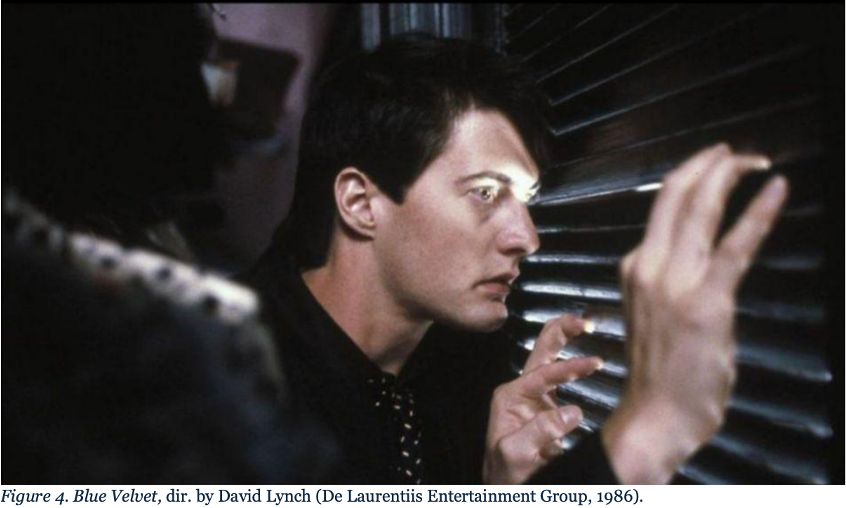
Slavoj Žižek performs the role of the voyeur in his analysis of the scene in Sophie Fiennes’ The Pervert’s Guide to Cinema (2002). By physically joining the scene and sitting on the sofa in a replica of Dorothy’s apartment, Žižek highlights the audience’s active process in watching cinema. Žižek embodies the role of the voyeur in his performance, with his face looking as Rachel Joseph observes, ‘both intrigued and disturbed by what he will witness, and his intense stare looks past the camera as if he can literally see the scene enacted in front of him’. Through this analysis, Žižek demonstrates the intense experience of watching cinema. Whilst the audience might be quick to judge Jeffrey’s voyeuristic endeavours, Žižek enforces the notion that the audience is no different, thus supporting his claim that ‘the cinema is perfect pervert art’, much like Meta glasses content. Although the scene is deeply disturbing, Lynch denies the audience passive viewing. Like Jeffrey, they too gaze at Dorothy, leading to her objectification, whilst the voyeur remains hidden and secret in the shadows.

watch on Kanopy) – https://www.kanopy.com/en/product/perverts-guidecinema?frontend=kui
Lynch emphasises the power dynamics of voyeurism through the mise-en-scène of Dorothy’s apartment. Žižek argues that the observer and the observed are ‘never two parts of the same reality’, which is illustrated through the heightened femininity of Dorothy’s apartment.
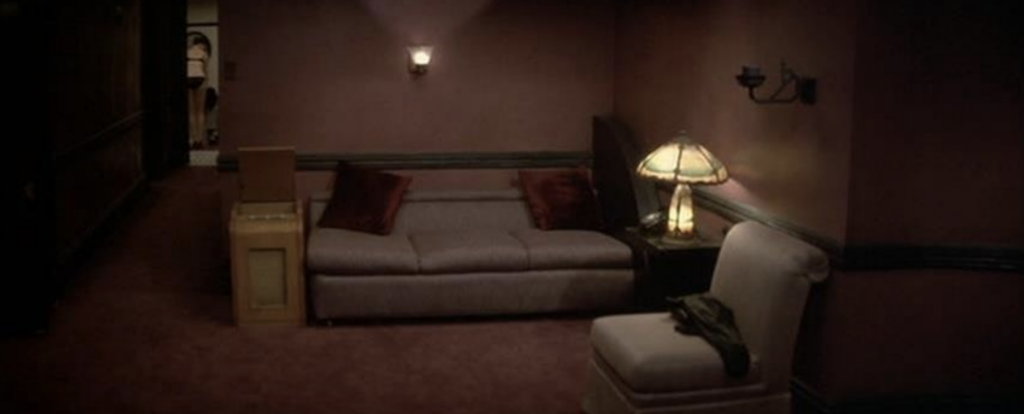
Through the low lighting, dusty rose walls and pale violet furniture, Lynch constructs an intimate atmosphere. This visual warmth, like Hopper’s bright yellow walls, directly contrasts with the darkness of the closet. Lynch visually demonstrates how the voyeur and object exist in their own distinct realms, thus heightening the extent of Jeffrey’s intrusion.
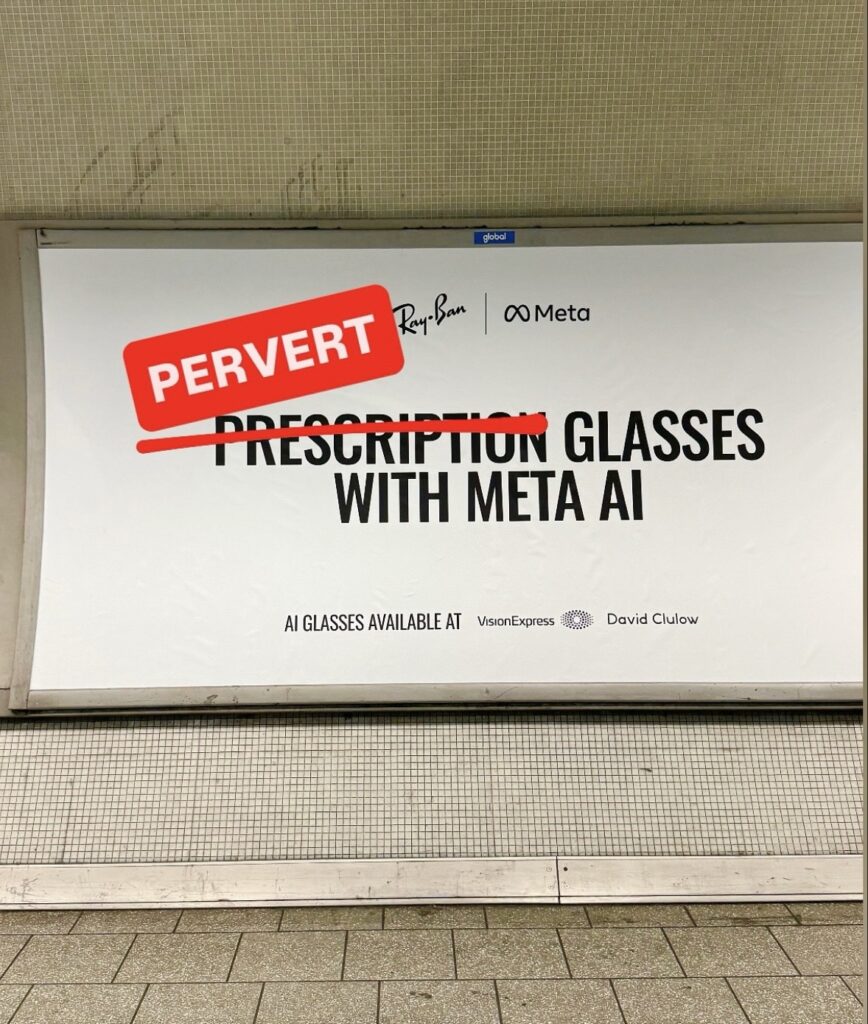
Both artists subvert the viewer into the voyeuristic lens. However, these are not real people, and the same ethics do not apply. Next time you see Meta glasses content being used to objectify women, I want you to take a moment and look at the comments and consider how she is being used for men to leverage power, all without her consent. Whilst returning home to London, I saw a Tube advert for Meta glasses in collaboration with RayBan. To advertise these pervert glasses in a tube station, where women feel increasingly unsafe and are constantly pestered by creepy men, feels incredibly tone deaf. TFL have posters saying unwanted looking is sexual harassment, so why are Meta glasses allowed to be advertised?
To make matters worse, as reported by Wired, Meta silently added face recognition for their smart glasses, meaning people can be identified via biometric data stored on users’ phones. As we continue technological advancement without proper legislation and safety precautions, we become closer to a cyborg, wearing AI upon us and where, once again, profits come before women’s safety.
Written by Mary Wilson
Art Direction by Abigail Owen
Bibliography
Blue Velvet, dir. by David Lynch (De Laurentiis Entertainment Group, 1986)
David Chute, ‘Out to Lynch’, interview with David Lynch, Film Comment, 1 September 1986 <https://www.filmcomment.com/article/out-to-lynch-david-lynchinterview-blue-velvet/> [accessed 3 January 2025]
@glass_museum, ‘On meta glasses, pickup artists, and possession’, TikTok, 4 April 2026, tiktok.com [accessed 22 June 2026].
Hopper, Edward, Night Windows, 1928, Oil on Canvas, The Museum of Modern Art, New York, United States of America
Joseph, Rachel, ‘The Screened Stages of Slavoj Žižek: The Surplus of The Real’, College Literature, 42.3 (2015), pp. 442-463 (p. 459) [accessed 4 January 2025]
Laura Mulvey ‘Visual Pleasure and Narrative Cinema’, in Film Theory and Criticism: Introductory Readings, ed. by Gerald Mast, Marshall Cohen and Leo Braudy (Oxford University Press, 1992) pp. 746-767
Leonardo Goi, ‘The Horror and the Voyeur: David Lynch’s “The Elephant Man” and “Inland Empire”’, MUBI, 2019 [accessed 5 January 2025].
Susan Sontag, On Photography (London: Penguin, 1978)
Leave a Reply