
How do Met Gala Themes reflect cultural shifts?
For 77 years, the Met Gala has served as a playground for celebrity elites, a runway for fashion’s finest figures, and a glimmering mirror positioned to shine light on contemporary cultures. What once was an exclusive fundraiser for only the highest of society has now evolved into a global spotlight, which leverages the silver tiles of a mirror ball to truly reflect the cultural shifts of modern society.
The intersection between haute couture and anthropology has undergone decades of metamorphosis; as garments ebb and flow between departments, marginalised sociocultural perspectives remain swept under the carpet, anticipating their bloom into the mainstream. The high society of art and design is preparing to be traced intently by the world’s eyes, but it may be apt to consider society’s own reflection when gazed upon through the facets of diamond necklaces.
The Met Gala’s themes shamelessly tap into the zeitgeist, channelling society’s contemporary anxieties to curate a performance of identity, artistry and cultural commentary. Stitched into every hemline is a story, offering often unspoken words to encapsulate centuries of cultural perspectives that historically existed outside of mainstream discourses.
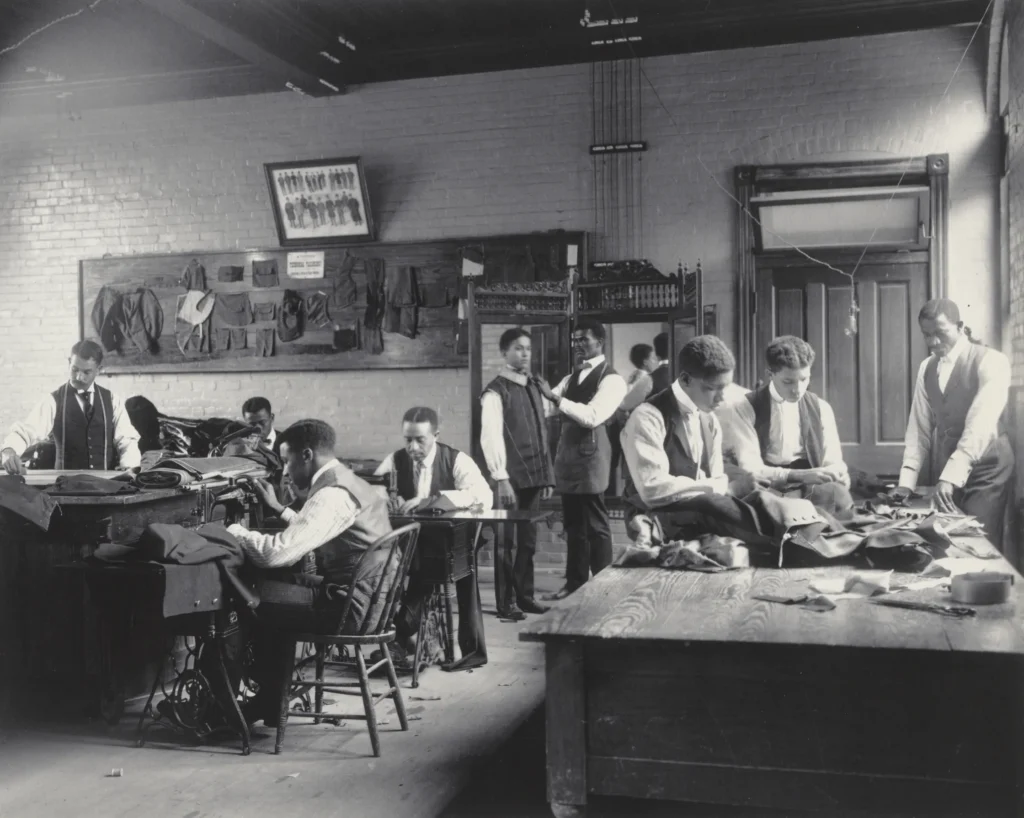
Thematically focusing on the Superfine nature of Tailoring Black Style at this year’s event affords sociocultural space within the paradigm of materialism in the age of celebrity-driven capitalism. Famous faces taking to the carpet to illuminate the diasporic roots of black dandyism, showcasing the sharp creases of a well-tailored zoot suit and bold colours and prints as iconography of renaissance, places a gleaming mirror before a global audience. The Met Gala exists as a well-curated pause; a tool for resistance or reinforcement, and a moment to reflect on the contemporary tectonic shifts undergone as a worldwide community.
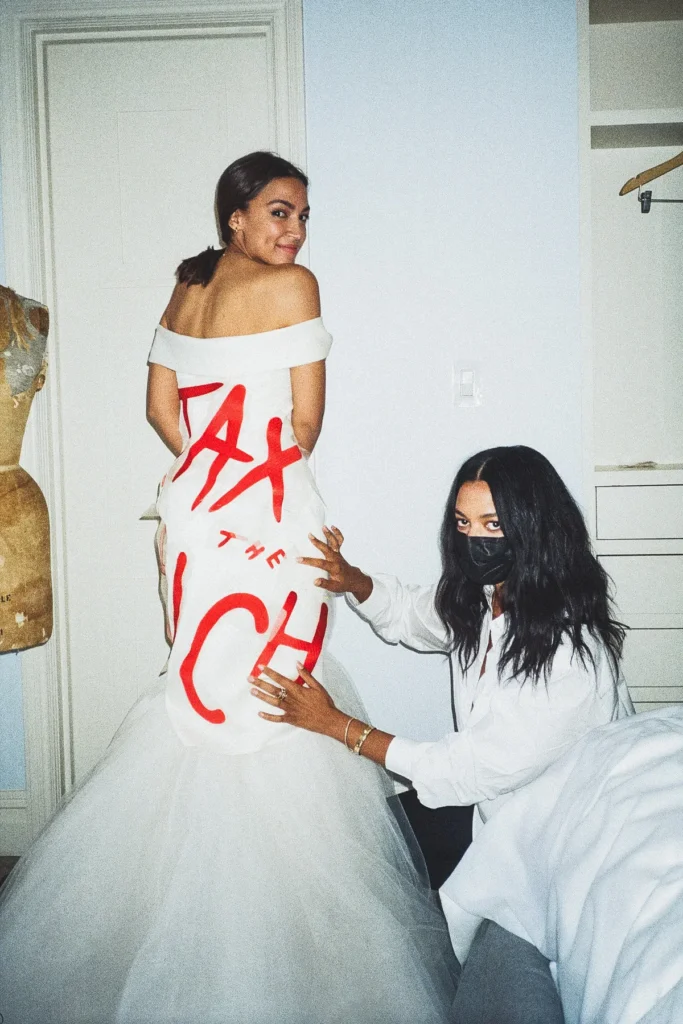
Take Heavenly Bodies (2018), Camp (2019)and In America (2021), for example. Cultural winks. Elegant middle fingers directed to those driving segregation and sociopolitical unrest. Lined pages awaiting scrawls of debate far beyond the press. Born out of these meta-commentaries are now iconic symbols, including Alexandria Ocasio-Cortez’s “Tax The Rich” gown, which championed provocation – a white canvas emblazoned with poignant messaging.
Just as Tailored For You exists as a societal mirror in the wake of the Black Lives Matter movement, these former themes carried the weight of lived realities encased within cultural discourse that strove to mainstream the identities of the immigrant diaspora, queer communities, and mobilisers of change. When fashion spoke, society listened.
Under the watchful intellect of the exhibit’s co-curator, Monica L. Miller, author of Slaves to Fashion: Black Dandyism and the Styling of Black Diasporic Identity, this year’s red carpet will trace the lineage of the diaspora into the contemporary age. The theme draws attention to the role of black masculinity within fashion as it converges with garment-driven storytelling; a reflection of a cultural reckoning stemming from years of sociopolitical uprising and calls for inclusivity and historical correction. Framed by some as an ‘incredibly political moment’, this year’s gala serves as visual activism, which shines light upon lived diasporic experiences on the world’s largest cultural stage.
In the same way Heavenly Bodies (2018) and Camp (2019) paid homage to the queer, marginalised, international roots of fashion at the time, existing as a two-way mirror amongst a cultural context of political and religious dichotomies, Tailored For You will aim to adorn the world with a rich tapestry of heritage and a celebration of black sartorial excellence. The Met Gala attendees’ takes on dandy fashion function as a conduit to sociocultural discourse, stopping time to encourage a reflection on the past, present, and even the future.
The Met Gala exists to serve its purpose as a living archive of cultural swings. It cements cultural histories within the sludge of the modern age, channels an alternative perspective, and reflects us in all our complexity. Epitomising the very meaning of art is no mean feat, but rolling a red carpet through a cultural prism may be enough to refract our identities back onto us, in the hope we discover more from the night than a designer label.
Leave a Reply