
By Naomi Eden
Your activism might need folk music – and it may have been the closest we’ve ever been to true class consciousness. With the uncertain future of longstanding festivals such as Cambridge Folk Festival, a future without traditional music is potentially already under way.
Folk music can be generally described as tales and history retold across hundreds of years by different voices. The songs still being recorded today may have been written by unknown writers hundreds of years ago in order to document real issues. Figures of power and government may have long been wishing that this form of resistance would be forgotten by the people, and for many, it has been.
Folk music was a weapon against the miseducation and silencing of the mistreated. The media, history books, the schools in which those history books are in- all of these institutions do not examine historical mistreatment of workers, but folk music did. Individuals who could not read or write, who were thrown to the side by the sweeping arms of capitalism, knew exactly who the arms belonged to through the songs they would sing together.
With these songs, protest could be exercised in corners of forgotten or downtrodden villages. It could have been the humming of a song under a child’s breath as they walk to school, or a teenager plucking the right chords on a second-hand guitar- even a group of friends at the pub who shriek some of the right words as they’re ushered out after close. Protest was word of mouth, and word of mouth became understanding of the enemy. Current artists seem to believe the enemy has not changed, with Charles Hendy of The Mary Wallopers describing this sentiment when discussing his own work in a recent interview: ‘It’s kind of disappointing that 400 years ago, the songs were still about landlords and stuff like that.’
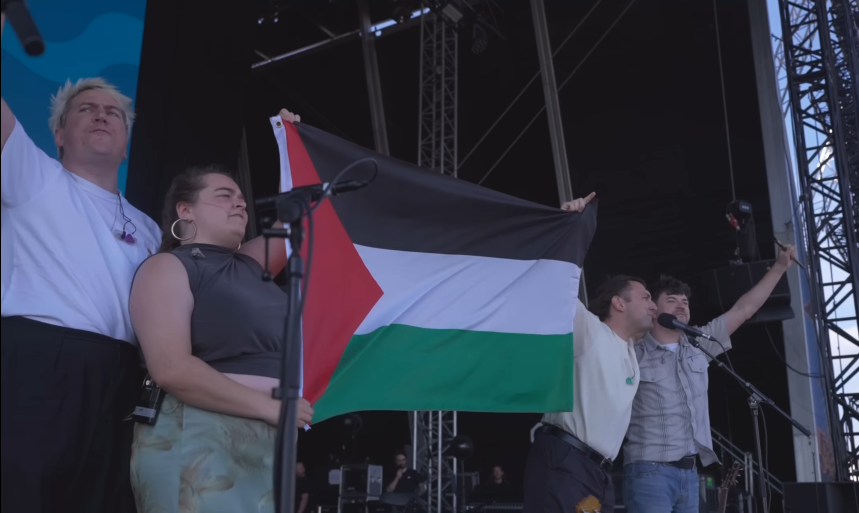
The spark of resistance is still alive in the small pockets of folk music that still thrive. In August of this year, The Mary Wallopers (previously mentioned) had their set cut at Victorious Festival for refusing to take down a Palestinian flag they had draped over the speaker behind them. A man within a video of the incident can be heard telling the band that they ‘wont play until the flag is removed.’ On a bigger stage, folk musicians are expected to censor their activism. But that goes against the very nature of their work.
There is a solidarity within folk music which has been lost on society in the digital age. These songs allowed for history to be retold and to spark political discussion. Irish folk music, particularly, is an example of individuals using folk music to preserve their history; these songs retell the atrocities committed by the English power. In rural corners of Ireland, the songs are still sung under the breath of bartenders after being shouted by punters. The individuals singing these songs most likely do not know the name of the writer, but they do know their history.
There are many factors pointing towards the decline of the genre: the challenges facing grassroots venues, an ageing population, and sessions becoming a struggling format in a rapidly changing society. In the 1960s, there were approximately 3000 of these clubs in the UK. In 2025, there are around 160.
It may be fair to argue that protest should be more extreme in the digital age. Even demonstrations such as destroying priceless art become obscured in the flicker of the thousands of images that hit our phone screens every day. Perhaps, a melody would be a spark ignored in a sea of burning anger, and so much noise would possibly drown out a song. With the digitalisation of the genre, it could be argued that this goes against the nature of the tradition, opening the door to corporate and algorithm-based influence.
I spoke to an ex-folk musician to understand society’s growing indifference to traditional music and whether it is still a strong form of resistance.
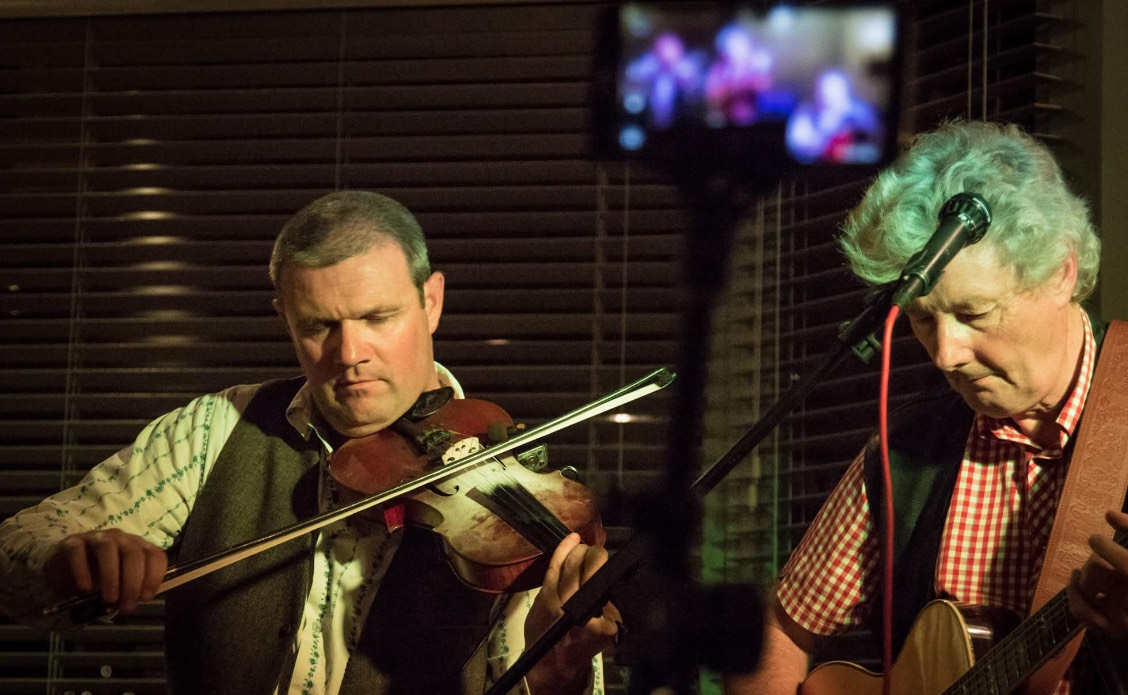
Jay Keeley Roberts, 53, from Conwy, Wales, used to be a full-time folk musician playing venues six nights a week across the UK. With bands such as Clan Morrigan and Brandistock, he played the violin: an instrument he had learned from being eight years old. Roberts grew up around folk music, attributing this to the folk music revival of the 60s and his parents’ taste in music. He recalls having been an attendee of festivals such as Cambridge Folk Festival for as long as he can remember, eventually moving on to bring his own children to these festivals. “With Cambridge Folk Festival, they sort of ran out of road. There aren’t a lot of people coming through. There are people at the very top, and beginners, but not much middle ground.”
We discuss how the scene of folk music has changed, and maybe why it has become less embraced in the 21st century. “The folk club scene was massive after the 70s, every town would have at least one. It’s also geographical. For example, in Scotland, it’s much bigger than here. Is it because they have more pub culture? Or they lean on their culture more than English people. They have a lot more to complain about.” A geographical aspect may certainly be present. In Englands bustling cities where folk clubs may have once been a main attraction, they have been squeezed out by developers in the pursuit of modern. More flats creates more workers in the city, and less folk clubs means these workers are less exposed to learning about their mistreatment. There may be a cultural space for folk, but certainly no physical space in amongst the burst of skyscrapers touching the clouds.
Scotland, with its more rural identity and less cramped spaces within its cities (typically favouring older, Victorian architecture), has the space. Old buildings still ooze tradition, creating a melting pot perfect for politically charged musicians to share their writings in a dim tavern. Whispers of old tales are carried in the wind and blow through stained glass windowpanes. With stone walls and narrow alleyways, the Scottish are visibly struck by their history whenever they go outside- the English? Not so much. The reflective window panes of skyscrapers in cities like London would encourage oneself to fix their hair or adjust their jacket before they could ponder a reflective thought.
‘It used to be thriving, and now you can hardly get a pub session together. All you’re relying on is people stumbling on it or parents passing it to their children. Going back to Cambridge, you see a lot more grey hair than black and brown hair.’
Jay is certain that folk music has always been a form of protest. He discusses in a passionate manner, as though these questions are ones he’s ruminated on in his own time. ‘It’s in the name, music for the people’
-Make no mistake, politics plays an important part in folk music. You don’t have to look into it very much to find it at all. Whether it’s now or in the past, it’s always been there, and always will be.’
To finish our conversation, I asked him about his hopes for the genre. ‘Because there aren’t small clubs and venues, or small stages, the only way to get out is online- but that sort of carry on doesn’t suit everyone.’
‘You’ve just got to hope that people have got something to say, and something to complain about. There’s more to complain about now than any time in the past. As long as people can find it within themselves to do that, then it’ll be okay.’
Written by Naomi Eden
Leave a Reply