
From September 2025 to January 2026, London’s Barbican hosted Dirty Looks: Desire and Decay in Fashion. The exhibition, organised by curators Karen Van Godtsenhoven and Jon Astbury, explored themes of dirt and regeneration within fashion. Various designers stood up against the conventional ‘rules’ of fashion, embracing unorthodox practices and inviting us to question, disrupt, and deconstruct traditional norms of beauty.
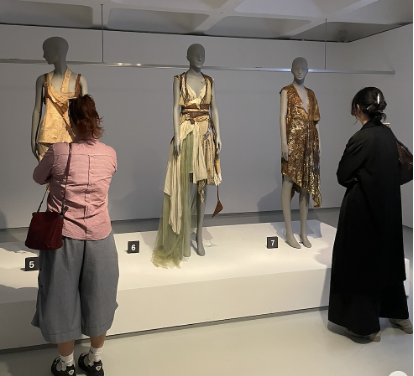
Dirty Looks: Desire and Decay in Fashion
Arguably, some of the most memorable pieces in this exhibition were found within the Leaky Bodies collection. Di Petsa’s Spring/Summer 2025 designs from My Body is a Labyrinth explore why certain natural bodily functions are deemed inappropriate within societally imposed aesthetic ideals. Garments stained with menstrual blood, sweat, and lactation disrupt our preconceived expectations, challenging our perception of what is acceptable to wear. One standout piece is a pair of frayed, unravelling trousers, provocatively labelled by Di Petsa “masturbation jeans.” Of course, while we may draw parallels to the proliferation of fluids being used as fashion statements from the likes of Doja Cat at the Met Gala, these demonstrations have been executed in a glamorous, sexualised manner – until now.
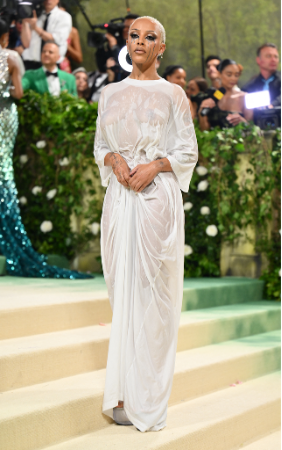
Doja Cat in a Vetements wet T-shirt dress at the Met Gala.
What sets Di Petsa’s work apart is its simplicity, the use of white tank tops allows these various symbols of human nature to take center stage, sending a message of self-acceptance and liberation. It is precisely the ‘unsexiness’ of these pieces that make them so sexy. Confronting what society shames about our bodies exudes a raw, unapologetic sensuality, allowing us to embrace the natural beauty of being human. Leaky Bodies is arguably the most taboo section of the Dirty Looks exhibition, perhaps because it feels the most real. After all, many of us are more likely to walk down the street with a period stain on our trousers than a dress made from chemically crystallized sweat.
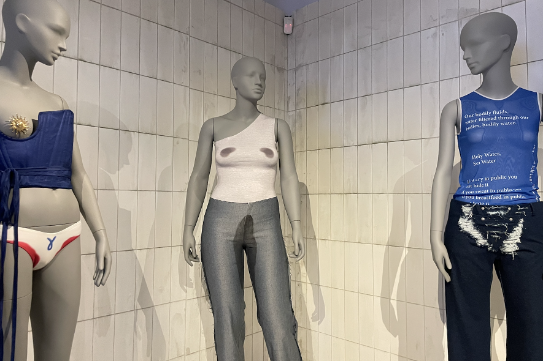
Leaky Bodies Collection
This brings me to the work of Alice Potts, who takes the use of bodily fluids a step further by using them as a transformative agent. Potts collected sweat from herself and others, which was processed into a salt solution and absorbed into textiles. Over time, this solution crystallised, forming a delicate coating on dresses, bags, and shoes. Shown below is a mid-20th-century Madame Grès haute couture dress, glittering with jewel-like (sweat!) crystals. The beauty of this process lies in its variability: the formation and appearance of the crystals differ according to the biological makeup of each person’s sweat, giving every piece a deeply personal, genetic quality. The work offers a poetic statement on how something deemed dirty or undesirable can, when cared for and recontextualised, transform into something unexpected.
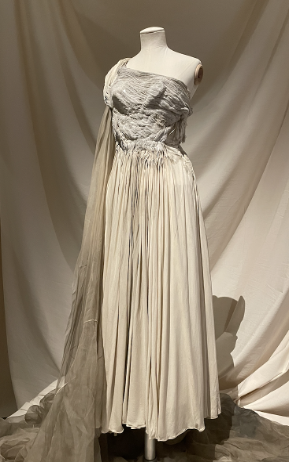
Alice Potts, Perspire Madame Gres: Biocouture 2025
American designer Elena Velez actively rebels against the fashion industry’s narrow and idealised female archetypes, seeking to subvert the conventional image of the modern model by presenting what she describes as an “imperfect depiction of female power.” Her work embraces abrasion and damage, incorporating salvaged materials that appear torn, rusted, or violently distressed. Through these choices, Velez exposes the sanitised images of femininity that fashion and beauty industries so often promote, replacing them with themes of resistance and strength. Her Spring/Summer 2024 collection, The Longhouse, was accompanied by a short film titled Chronology of Deterioration which demonstrates physicality, anger and struggle by depicting two women wrestling in dirt. Velez positions her work as a direct confrontation of the pristine models, flawless fabrics, and disciplined behaviours traditionally exhibited by the fashion industry.
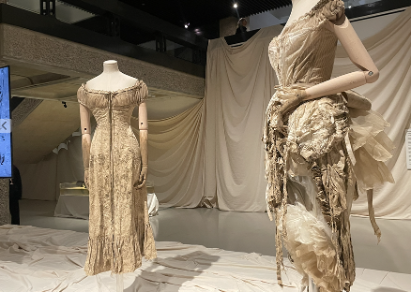
Elena Velez, The Longhouse, 2025
Similarly, Michaela Stark critiques what society and the fashion industry have deemed conventionally beautiful, or unacceptable, within the female body. The designer uses a series of intimate self-portraits in her 2025 collection, Growing Pains, presenting garments that actively distort and reshape the body. This approach rejects the traditional function of shapewear and undergarments, which are designed to smooth, contain, and discipline the body. Instead, Stark allows her flesh to appear oozing and bulging. Her fabrics are torn and ruptured, reinforcing this tension and acting as visual metaphors for the damage caused by the fashion industry’s relentless attempts to mould the female body. The close-up, deeply personal nature of the imagery intensifies this sense of exposure and vulnerability, emphasising how profoundly societal expectations can affect an individual’s relationship with their own body. The lavender-coloured thread that runs through the garments is said to resemble veins or roots, suggesting both bodily interiority and organic growth, perhaps evoking the idea that these pressures are embedded deep within us.
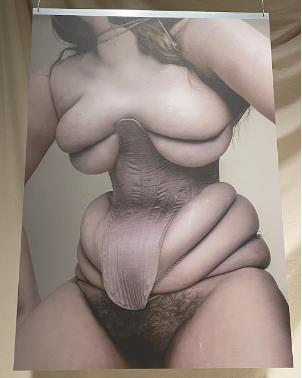
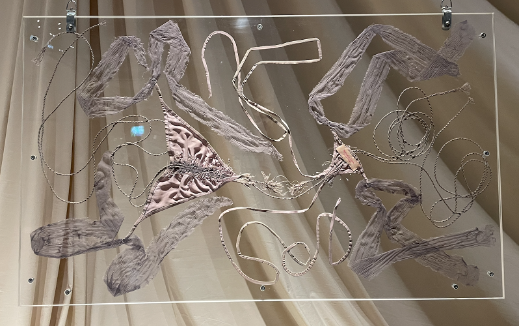
Michaela Stark, Growing Pains 2025
Other designers have critiqued the ephemerality of the fashion industry’s resources and products through the use of repurposed materials. By creating garments from everyday objects, these designers challenge definitions of “waste,” and resist the industry’s cycle of disposability, suggesting that any material can hold value if recontextualised. For example, Andrew Groves constructed a maxi dress made entirely from razor blades, transforming a mundane, utilitarian object into something simultaneously alluring and threatening. For me, this piece brings to mind imagery of 90’s Kate Moss during the height of the “heroin chic” aesthetic, an era glamorising fragility and self-destruction. Perhaps Groves deliberately embedded risk into his garments to serve as a critique of fashion’s fascination with harmful ideals. The constant threat of cutting oneself forces the hypothetical wearer into a heightened state of awareness, limiting movement and dictating posture and behaviour. The body is no longer free, but disciplined and restricted, suggesting how fashion can demand self-surveillance and restraint in pursuit of beauty.
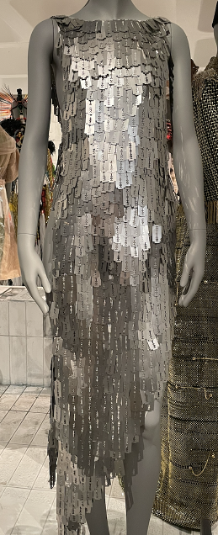
Andrew Groves, Cocaine Nights, Spring/Summer 1999
These incredible, imaginative pieces within the Dirty Looks: Desire and Decay exhibition provide only a small snapshot of the array of talent included. By resisting polished ideals and instead embracing the abstract, unconventional, and the imperfect, Dirty Looks invites viewers to reconsider why something may be deemed beautiful, valuable, or desirable.
Leave a Reply