
By Raquel Ruiz
Part Three of Sleeve Magazine x Raquel Ruiz’ Daughters Trilogy
There is a specific blueprint that must follow to a tee in romance movies. There is always a meet-cute, a montage of fun dates or heartbreak happening for the main character (movies that come to mind are Down With Love, 27 Dresses, How To Lose A Guy in 10 Days) and the finale always ends with the guy or girl realizing their feelings, running through the airport, or traveling across the world to make grand gestures or declarations of love to their love interest. When I think about protagonists in movies or television shows, especially those where the main or side plot focuses on romance, a few things come to mind: Is the love they are looking for permanent or something temporary? Will their love interest make the protagonist grow as an individual? Has the protagonist run away from love before? (Whether it was due to convenience or the time.)
Even as a rom-com enthusiast – I had to brush up on romance movies from the past and the present. Within romance media, I wanted to explore music that has influenced romance in general, the hair theory, and, most importantly, the concept of waiting. My parents signed me up for a pre-college experience, a 3-month program at a college in Vermont, where I took classes, learned about the layout of college life, and so on. During this program, I watched She’s All That with some of my roommates who had never seen the movie before, and I felt lucky to see their reactions to the masterpiece firsthand. A special thanks goes to the needle drop of ‘Kiss Me‘ by Sixpence None the Richer. ‘Kiss Me’ is an iconic song that raised a generation of hopeless romantic women just like me who will listen to the music, smiling to themselves, dreaming about having that moment like Laney Boggs in a glitter prom dress; but without the makeover that will make the guy realize that you have been in front of them all along. That somehow clicks into their mind that you are the one.
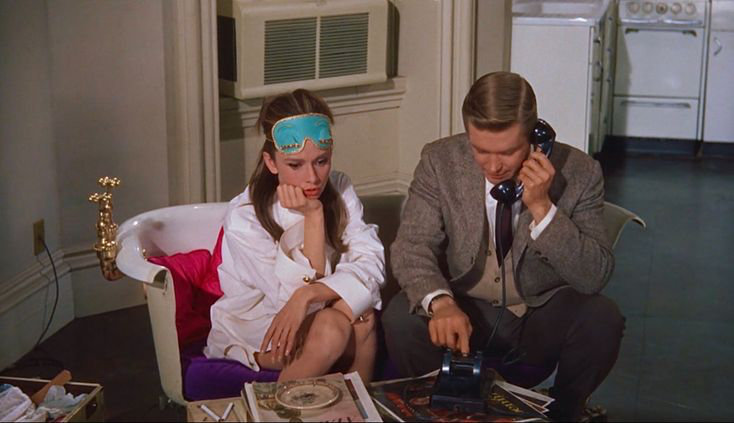
There will be rom-coms referenced from years to come that have had a lasting impact on our modern culture. Breakfast at Tiffany’s is arguably one of the most talked-about romantic comedies, and there are a lot of negative and positive responses to it that are all valid. A rom-com can only be as good as the music that accompanies it because it helps further the story and the characters’ emotions. The features in Breakfast at Tiffany’s that stand out to me are the song ‘Moon River‘, the fashion, and the rain-kissed moment between Paul and Holly. Holly Golightly is a representation of the classic American love interest in romance, and it’s not just because Audrey Hepburn, an entertainment industry icon, plays Holly. Her performance in this movie is magnetic. Holly is a carefree dreamer, a single girl who enjoys to party in New York City with no wanting to be a housewife – that’s how the viewers see her and since that’s a common trend within romance novels and movies; it just adds onto this stereotype and misconception of what a girl needs to do to find love which makes Holly as a character all the more classic.
At first, audiences need to see relatability during movie screenings. Barbara Streisand’s character, Judy Maxwell in What’s Up Doc? may seem out of the classic American love interest cliche because Judy is up front and direct with Howard. Still, she checks off all the other boxes: someone who is independent, isn’t shackled down to anything or anyone.
As audience members, we don’t know much about her actual life, aside from the number of colleges she attended while pursuing different majors. Judy is just someone spontaneous, quick-witted, and carefree (similar to Holly). We can also acknowledge the cliché that the careers of most female love interests in early 2000s romantic comedies were in communications and journalism. The communication career cliche doesn’t necessarily make every character a classic American girl in romance media.
The classic American daughter in a romance novel or a romance cinematic masterpiece is more about whether the personalities are well-known to the point of overuse. It’s all about their nuanced tendencies; they are charming but not necessarily a bad girl, even though they can break the status quo to get a man’s attention. As an audience member, the lines blur over whether the classic romance girl is looking for lust or love. They aren’t “homewreckers,” but rather the love interest who may make the male protagonist realize they are stuck in a relationship they have outgrown. Again, I want to reiterate that the classic American girls in romance films open the male protagonists’ eyes to the truth that was right in front of them, the one.
There is an idealised blueprint of classic American daughters in romance – I decided to do some research and delve into social media PR for romcoms and how they are advertised in modern culture. How do production companies drive young female audience members to go to the theaters and see a romantic comedy? There are three important things I learned from marketing rom-coms.
One: celebrity romances and chemistry increases viewership a lot. Two: interviews with the main actors definitely create hype around the film, and, last but not least, three: the trailers and themed products promote a romantic comedy.
For point number one, I automatically think of the rumors that sparked during production for Anyone But You when Sydney Sweeney and Glen Powell seemed to get really cozy with one another on set, and that Glen Powell’s girlfriend broke up with him after rumors were spread in the media that the two actors were having some sort of affair-slash-relationship. I mean, how can you not fall in love with Glen Powell if you are working with him? I wouldn’t be able to handle it; there was a lot of palpable chemistry between those two actors, and Sydney eventually confessed that they fed into the dating rumors to help gain more traction and publicity for the movie to succeed. It ended up working great because the box office earned $220.3 million dollars worldwide for a film budget of $25 million dollars.
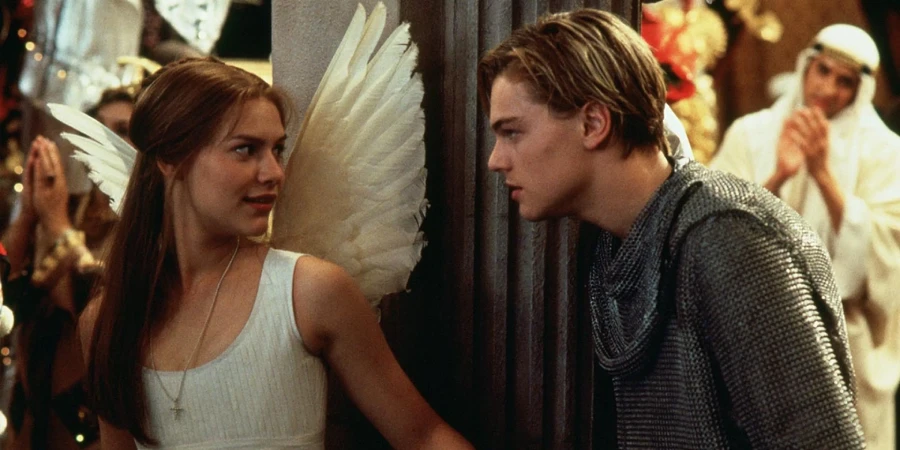
Romeo + Juliet, the 1996 adaptation directed by Baz Luhrmann, is often cited as one of the best tragic-romance films of all time about star-crossed lovers. This take on the Shakespeare classic speaks volumes about how trailers can impact the love and appreciation for this film. Leonardo DiCaprio was at the height of his popularity in Hollywood when this movie was released in theaters, which definitely helped persuade people to buy seats for Romeo + Juliet. This movie also graced us with ‘I’m Kissing You’ by Des’ree when Juliet entrances Romeo, and then plays softly in the background during the elevator kiss scene.
The cliche of girls being the ones to wait for the guy to make the move and make the relationship move forward. There is a lot of patience and waiting involved with the slowburn and the will-they-won’t-they tropes in romance novels and movies, where women don’t feel loved because of miscommunication, and again, I want to reiterate, the waiting and longing. They are waiting for a love that might not even come to them. They don’t know whether the romantic love and connection are mutual or one-sided, so what do they choose? The biggest question that many women in our generation ask is whether the guy was waiting for the right moment to talk to them, or if it was all in their head. One new-age drama that recently concluded featured the male protagonist and love interest yearning for the female character and waiting for their love. That number one yearner is no other than Conrad Fisher from The Summer I Turned Pretty. In the third and final season, he shows Belly Conklin how much he’ll be there for her, even though it breaks his heart that she is about to get married to his brother, Jeremiah. The ultimatum in romance media and relationships in real life is “Are you willing to accept the love that’s right in front of you, or are you going to wait for someone new?”.
Why do we crave love that may never come to us? There is a willingness to wait for “the one” and hope that the yearning you have for them will be reciprocated. There is patience and hope that the person you love will realize you have been in front of them all along, like you’re waving at them and saying, “Hey, it’s me you’ve been looking for!” with open arms.
Leave a Reply